In medical device purchasing, packaging is usually treated as the last item on the agenda. It is quoted late, specified loosely, and often inherited from whatever the factory already had. That is a mistake, because for a single-use needle the package is not a container: it is the sterile barrier that keeps the device sterile until the moment of use, the label that carries the lot traceability the clinic relies on, and in a private-label project it is the only part of the product the end customer actually sees before opening it.
This guide covers the four things a private-label needle program has to get right: the sterile barrier, the sterilization method, the labeling, and the documentation that travels with the shipment. It reflects the packaging and compliance process we follow at Wenzhou Taiyu Medical Technology Co., Ltd., where needles, pen needles and dispensing products have been manufactured under an ISO 13485 quality system since 2009.
What a Sterile Barrier System Has to Do
A sterile barrier system performs three functions at once. It keeps microorganisms out for the whole shelf life, it allows the product to be sterilized through or into the pack, and it allows the product to be presented aseptically at the point of use without contaminating it. A pack that satisfies the first two and fails the third is a product that will be opened once and never bought again, which is why the opening behavior of a peel pack deserves as much attention in the brief as its material.
The standard family that governs sterile barrier systems, ISO 11607, is the reference your registration file and your notified body will work from, so the packaging material, the seal and the validation evidence should be selected on that basis rather than on cost alone. In practice this means agreeing four things before tooling: the pack format, the material combination, the seal parameters, and the validation approach.
Blister Packs and the Equipment Behind Them
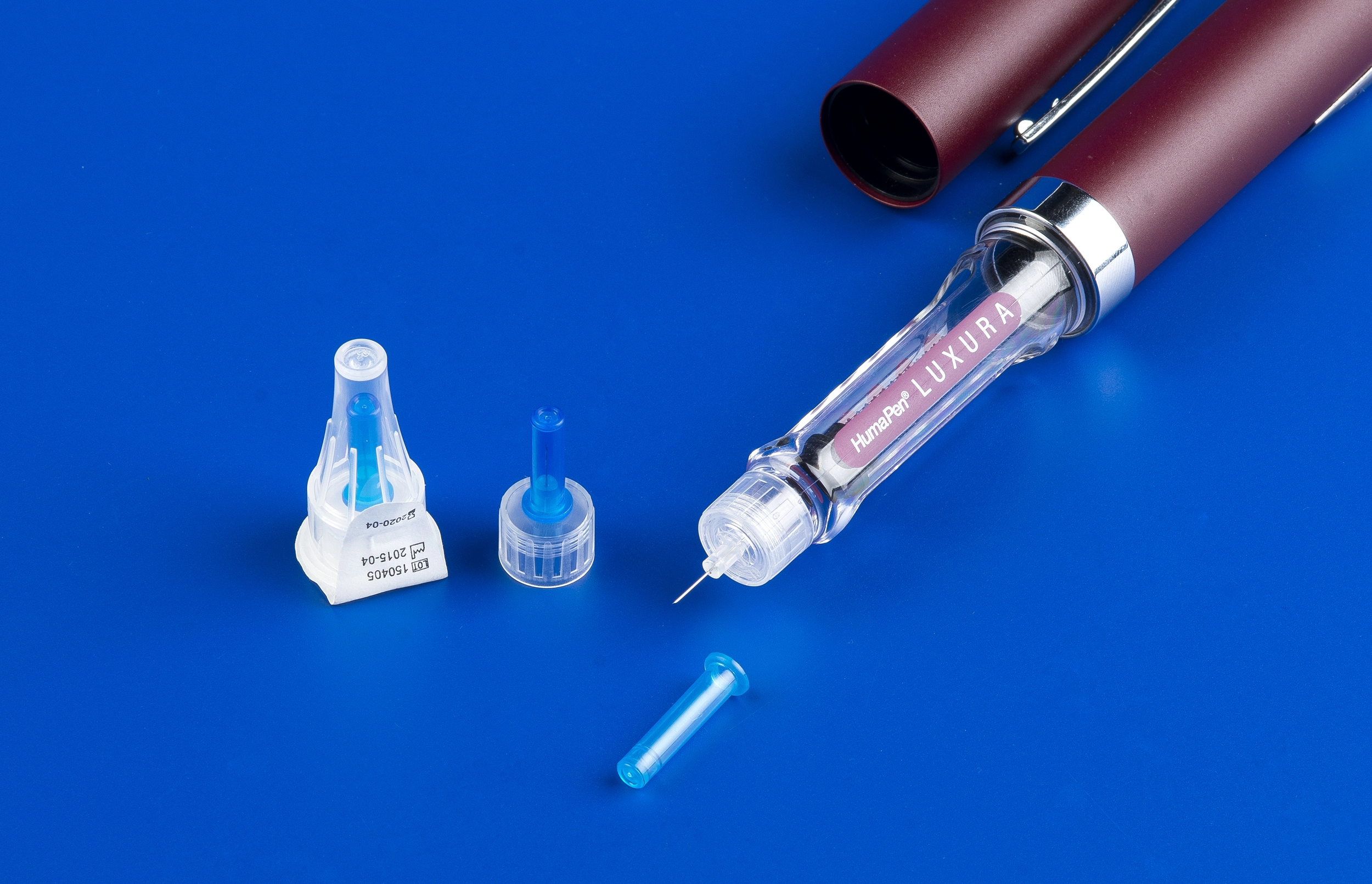
The two formats that dominate single-use needles are the thermoformed blister, where the needle sits in a formed cavity sealed with a coated lid, and the peel pouch, which is simpler and generally cheaper at low volume. A blister presents and protects the needle better and is the usual choice for pen needles and for retail-facing private label, because the formed cavity holds the needle away from the seal area and produces a flatter, tidier pack on the shelf.
What limits format choice is the machinery available to run it. Our facility operates three automatic blister packaging machines alongside our needle production lines, so blister formats can be specified without depending on a third party for the packaging operation. That matters more than it sounds: when packaging is outsourced, the responsibility for the sterile barrier sits between two suppliers, and the traceability of the finished lot becomes harder to establish.
Ethylene Oxide Sterilization and Product Release
Our single-use sterile needles are sterilized using ethylene oxide and are supplied sterile and pyrogen-free. Ethylene oxide is the appropriate method for a product with a stainless cannula, a molded hub and a silicone coating, because the process runs at low temperature and does not degrade the coating or the polymer components the way a high-temperature method would.
Two consequences follow for the buyer. The first is that residual ethylene oxide and its reaction products have to be controlled and reduced to the limits defined by the applicable standard, which in turn defines the aeration time and therefore part of the production lead time. The second is that sterility is established by validation and release, not by testing the finished pack. Practical questions to settle at brief stage are who holds the sterilization records, how the release decision is documented for each lot, and whether your market requires a sterility assurance level statement in the technical file.
Shelf Life, Stability and Storage
Our single-use sterile hypodermic needle carries a declared shelf life of five years. That figure is only meaningful if it is supported by stability data for the specific pack, seal and material combination you are ordering, so a private-label project that changes the packaging material or the seal width is, strictly, changing the product. This is why we recommend agreeing the pack first and the artwork second. Artwork can be changed with a print and proof cycle. A change of packaging material after launch requires the stability and seal validation work to be repeated.
Labeling: What Has to Be on the Pack
A single-use needle pack is required to carry the information that makes the device traceable and usable, and the list is longer than most first-time buyers expect. It normally includes the product name and the specification, including gauge and length, the lot or batch number, the expiry date, the sterilization method, a single-use and do-not-reuse indication, the sterility and pyrogen-free status, storage conditions, and the legal manufacturer with a market-appropriate address. Instructions for use have to be available too, whether printed or supplied as a document, and the format required differs between markets.
In a private-label project the label is also where your own brand and regulatory role appear, and this is the point at which the regulatory responsibility has to be settled in writing. A distributor selling under its own name may be required to appear on the label as the manufacturer or as a distributor depending on the market, and that decision is not one the factory can make on your behalf.
Artwork and Private-Label Print Control
Private-label print is a discipline, not a design exercise. Before printing, the artwork needs to be approved at a size that can actually be read, with the barcode or registration code tested against the scanner the market uses, and with the legal text at the minimum type size your regulator accepts. Two practical rules save considerable rework: keep the specification and lot fields in a fixed position so that changing a gauge does not require new artwork, and treat every artwork revision as a controlled change with a version number, so that a proof can be traced to the lot it produced.
Cartons, Shipper Marks and Export Presentation
Presentation decisions continue beyond the sterile pack. The unit-of-sale pack, the intermediate bundle and the master carton all have to be consistent with each other and with the way your market actually distributes the product. For export, the shipper normally carries the product description, quantity, lot number, expiry date, net and gross weight, dimensions, country of origin and the handling marks the transport mode requires. Neutral shipping cartons are often preferred by distributors who do not want the factory's identity visible on the pallet, and this is a specification point rather than a preference to raise at the last minute.
The Registration File Travels With the Product
For a regulated device, the shipment is only half the delivery. The other half is the documentation that lets your importer register the product locally: the technical file, the declaration of conformity, test reports, sterilization and packaging validation summaries, and the certificates that support them. Our products are covered by a quality management system certified to ISO 13485 and TUV CE, with EAC certification in progress, and we provide documentation support including full technical files and certificates for local registration. Where a design is being developed specifically for your market, regulatory consulting at design stage is more useful than documentation supplied afterwards, because it is considerably cheaper to design to the requirement than to redesign to it.
What to Put in a Packaging Brief
Send the market you are registering in, because it determines the label content and the technical file, the pack format you want and whether the needle must be presented in a formed cavity, the sterilization method you expect and who will hold the release records, the shelf life you intend to declare, your artwork status and whether you need a structural design service, your carton and pallet preferences including whether neutral shipping cartons are required, and your launch quantity and annual volume. If the needle specification itself is still open, settle that first: the parameters that define the needle are set out in our guide to specifying a custom hypodermic needle.
Working With Us
Wenzhou Taiyu Medical Technology Co., Ltd. manufactures injection needles, insulin pen needles, infusion needles, cosmetic needles and needle sets, and provides OEM/ODM services including private label, packaging formats and registration documentation support. Production runs in a Class 100,000 cleanroom on automated lines with CCD vision inspection, under a quality system certified to ISO 13485 and TUV CE, with a capacity of more than 500 million units a year. The quality system behind that production is described in our article on why ISO 13485 matters for medical consumables. Send us your specification, market and packaging requirement, and we will confirm format, sterilization route, documentation package and lead time; free e-brochures are available on request, and our FAQ page covers the standard commercial terms.