Commissioning a custom needle is not the same as buying stock. The product is small, the tooling is specialized, and the regulatory obligations that follow the finished device belong to the buyer, not the factory. What makes the difference between a project that ships on time and one that stalls is rarely manufacturing capability. It is whether the brief was complete, whether the specification was frozen before the mold was cut, and whether the documentation was planned at the same time as the product.
This article walks through how a custom needle program runs at Wenzhou Taiyu Medical Technology Co., Ltd., following the same five stages we use with export customers from inquiry to after-sales support. It is intended as a planning document for buyers, so that the questions you need answered are asked before rather than after a purchase order is issued.
OEM, ODM and Private Label: What the Terms Mean in Practice
The three models differ in who owns the design. In an OEM project the customer owns the design and the factory manufactures to it, working from your drawing, specification or reference sample. In an ODM project the factory contributes engineering, either by adapting a proven platform to your requirement or by designing the product around a starting point you provide. Private label sits alongside both and refers to the presentation: the product is sold under your brand, which changes the packaging, the labeling and the regulatory role recorded on the label, though not necessarily the design itself.
Most needle programs are a mixture. It is common, for example, for a buyer to specify the gauge, length and bevel from their own clinical requirement, to accept the factory's existing hub mold and connector design, and to take the packaging and artwork under their own brand. The useful discipline at the start of a project is to decide, for each of the three layers of the product, who is making the decision. Our capability across those models, from clinical needles to custom-diameter stainless capillary tubes, is summarized on our about page.
Step 01: Inquiry and Consultation
The first stage establishes whether the product can be made, and at what scale. The most useful inputs at this point are the product specification and the intended application, the quantity you expect in the first order and over a year, and the certification the destination market requires, because the certificate set influences both the material choices and the documentation workload. A drawing is ideal but not essential: a physical sample of an existing product is often a faster starting point, because we can measure the tube, the bevel and the connector directly rather than interpreting a dimension table.
This is also the stage at which regulatory questions should be raised. If the needle is going into a market that requires CE marking, or into a market where the EAC certificate applies, the design decisions that affect compliance are cheapest to make now. Our team provides early-stage guidance so that the design meets CE and ISO requirements rather than being revised to meet them later.
Step 02: Quotation and Contract
Once the specification is understood, we quote. Price, tooling, minimum order quantity and lead time are confirmed together, and the trade terms and Incoterms are agreed at the same time, because the shipping term changes the price as much as the specification does. The stage closes with a proforma invoice, which also fixes the payment structure and the commercial invoice format your customs process will use.
Two commercial points are worth settling here. Our bulk order lead time is normally 15 to 30 days, but it varies in peak season and for special materials, so the delivery date should be confirmed against the specific material rather than assumed from the standard range. And because some regular models are held in stock, it is worth asking whether part of your requirement can be met from existing production while a custom item is being tooled, which is a common way to shorten a launch.
Where Sampling Fits
Sampling is not a formality. For a custom needle it is the point at which the specification is validated in metal, and it is far cheaper to change a bevel angle or a hub dimension on a prototype than after a mold has been cut. Our development work uses advanced CNC sampling for stainless steel capillaries and needle bevels, which allows the geometry to be adjusted and re-cut without waiting for production tooling.
A useful sample evaluation covers more than fit. The dimensions should be measured against the drawing, including inner diameter and concentricity rather than outer diameter alone; the connector should be tested on the device the needle must work with; the bevel should be assessed for sharpness and penetration force; and the coating should be checked for consistency along the cannula. Where the product will run on automated equipment, as dispensing needles do, the sample should also be trialled on that equipment, since a needle that passes dimensional inspection can still fail to feed reliably. The parameters that belong in the specification are set out in our guide to needle specification.
Step 03: Production and Quality Control
Production is scheduled against the approved sample, and it runs under the same quality system that governs our standard products, certified to ISO 13485 and TUV CE. Needle production, hub molding, assembly, sterilization and packaging are controlled as a sequence of inspected stages rather than a single final check, following strict ISO standards and multi-stage inspections.
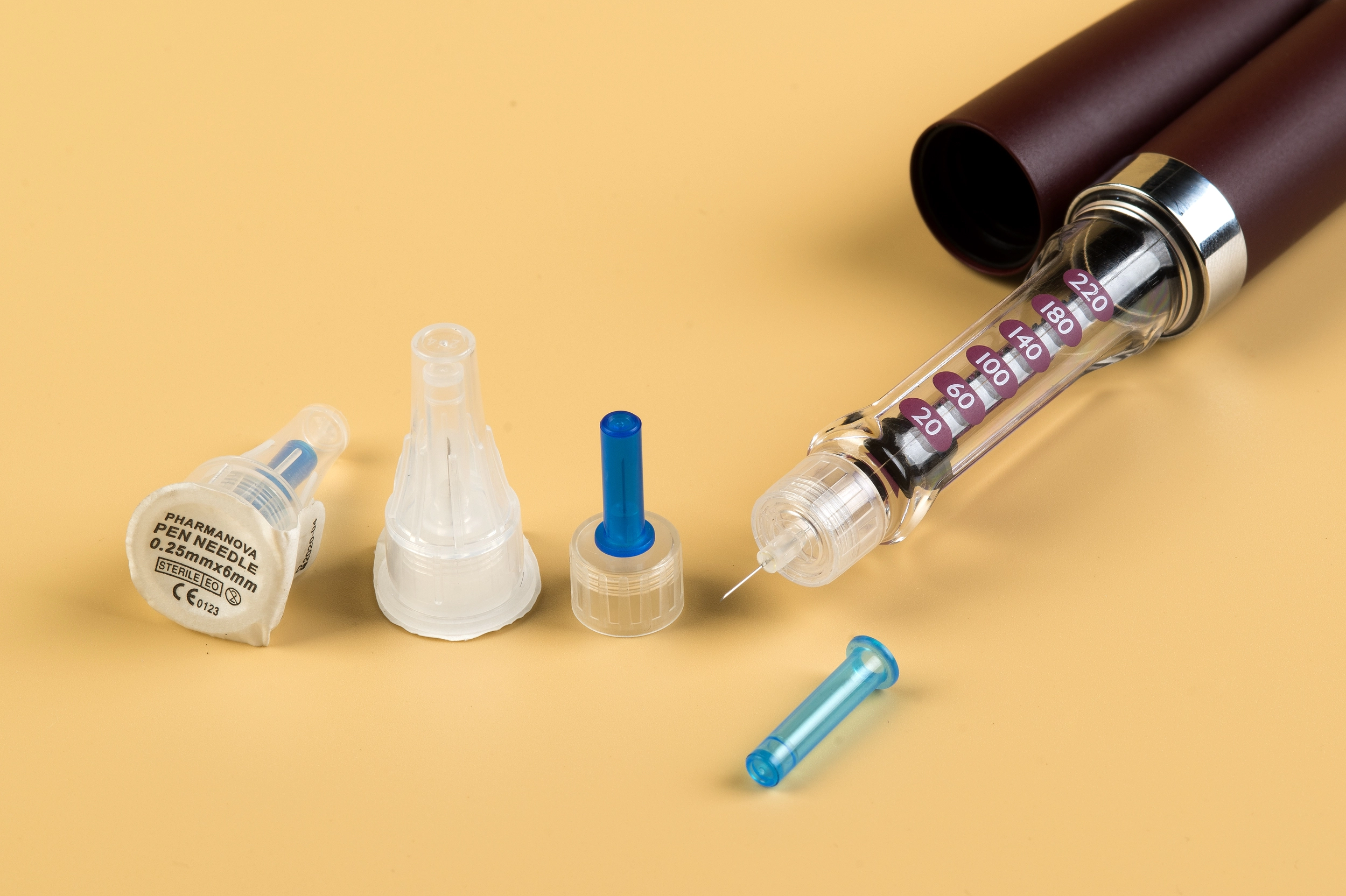
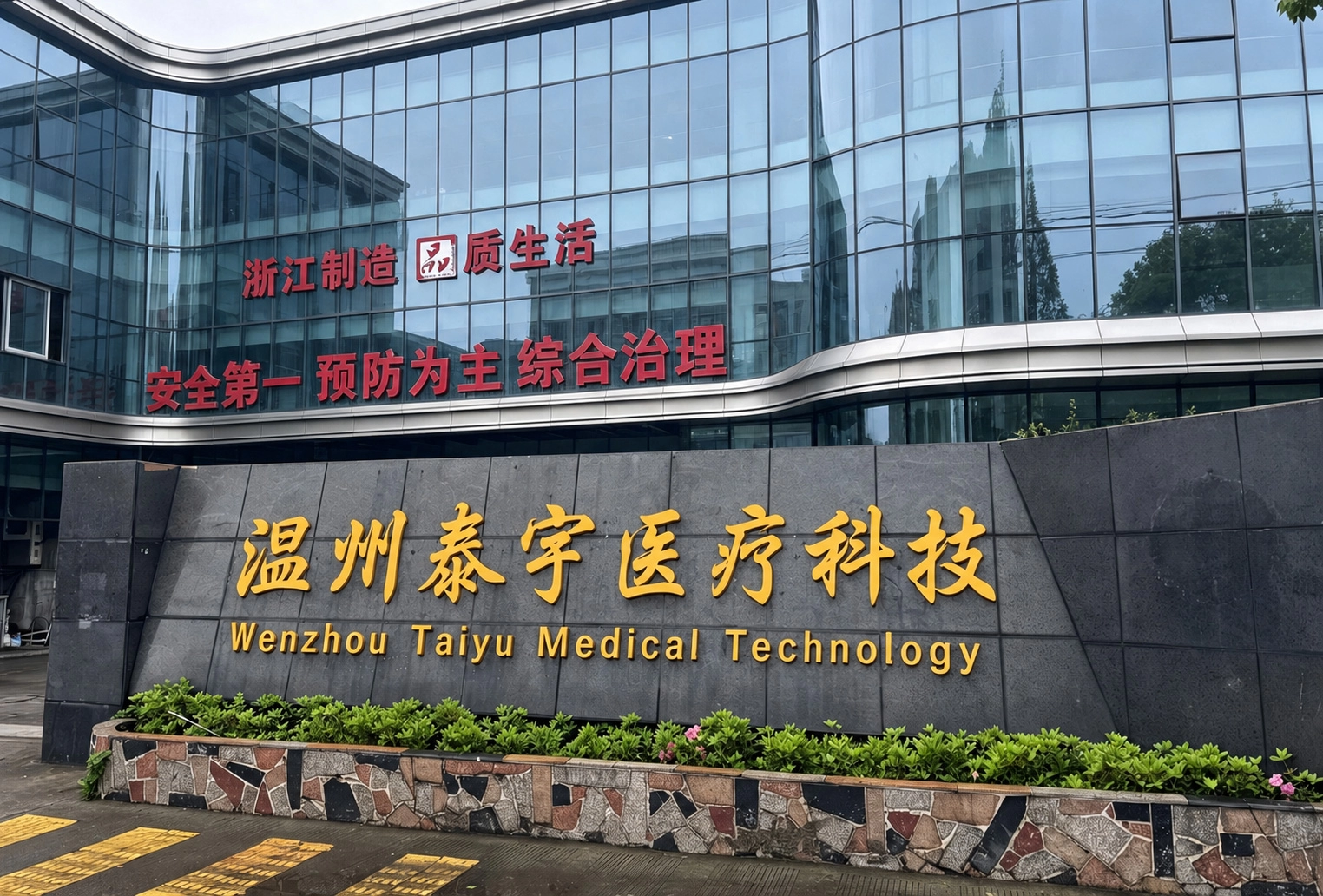
What the customer can verify is capability. Our facility occupies 10,000 square meters with more than 220 employees, and operates six professional tube-making equipment sets, sixteen injection molding machines, six dispensing needle production lines, three automatic blister packaging machines and two automatic insulin pen needle production lines. Production runs in a Class 100,000 cleanroom on fully automated lines that integrate CCD vision inspection, which is what allows 100 percent quality control of every component rather than sampling, across an annual capacity exceeding 500 million units. Needle tip formation uses triple-bevel grinding with silicone coating to control penetration force, and our tooling supports gauges down to 34G. Where the destination market requires it, lots are released against sterilization records as described in our guide to packaging, labeling and documentation.
Step 04: Logistics and Shipping
Shipping is planned, not appended. Booking, customs clearance and safe loading for sea or air freight are handled as one sequence, with the transport mode chosen against the delivery date and the value of the consignment. A needle shipment is dense, high value and sensitive to moisture and to physical damage to the sterile packs, so the carton and pallet specification is part of the logistics decision rather than a packaging afterthought, and it should be agreed before the order is packed.
Step 05: After-Sales Support and Documentation Handover
The final stage is the one that determines whether there is a second order. Documentation handover covers the certificates, technical files and test records that your importer needs, and continuous tracking keeps the specification, the artwork version and the regulatory status aligned as the program grows. Our after-sales technical support is available on call for customers integrating our needles into automated dispensing systems or into clinical products, which is usually a technical question about fit or flow rather than a commercial one.
Documentation support is worth planning at the start of a project rather than requesting at the end, because the technical file is assembled from records produced during development. We provide full technical files and certificates, including CE and EAC documents, to support local registration, and our products are currently exported to more than 50 countries across Europe, North America, Southeast Asia and other major markets.
What Moves MOQ and Lead Time
Four factors decide both the minimum order quantity and the delivery date, and all four are within the buyer's control. The first is whether the item already exists: an existing needle in an existing mold carries almost no tooling cost, while a new hub design or a non-standard connector requires a new mold. The second is how many sizes or configurations are in the order, because a requirement spread across many gauges and lengths behaves like several small orders. The third is the material, since special tube sizes and strip specifications may have their own minimum purchase quantity. The fourth is packaging, because a non-standard blister format or a new artwork set adds a print and proof cycle. Concentrating the first order into fewer configurations and expanding later is the most reliable way to keep both figures reasonable.
What to Prepare Before the First Conversation
Bring the application and injection route, the specification or a reference sample, the device the needle must fit, the certification the destination market requires, your launch quantity and expected annual volume, your packaging and private-label requirement, and your target delivery date. Send these and you will receive a quotation, not a questionnaire. Buyers who also review how to evaluate a needle tube manufacturer before committing tend to reach a workable specification in fewer rounds, and the wider assessment criteria are covered in our guide to what makes a good needle and needle tube supplier. If your requirement includes dispensing products rather than clinical needles, the application side is described in our article on applications of dispensing needles.
Working With Us
Wenzhou Taiyu Medical Technology Co., Ltd. is a direct manufacturer of injection needles, needle tubes, insulin pen needles, infusion needles, cosmetic needles and dispensing products, supplying clinical care, laboratory, dispensing and raw-material customers in more than 50 countries. We offer OEM, ODM and private label programs, CNC sampling, regulatory consulting at design stage and documentation support for local registration. Factory visits are welcome, and we are happy to walk a customer through the production and inspection sequence before a project starts. Send your specification, quantity and market requirement, and we will respond with a quotation, tooling position and lead time; our FAQ page covers the standard commercial terms, and our needle and syringe families are grouped under injection and medication preparation.